You are using an out of date browser. It may not display this or other websites correctly.
You should upgrade or use an alternative browser.
You should upgrade or use an alternative browser.
Lets have some History Thread
- Thread starter Gol15
- Start date


Valerie
Only one 23
- Messages
- 35,251
- Reaction score
- 22,176
It was the anniversary of the battle of Bosworth a week ago. Perhaps some Henricians emphasised a pointSlightly off subject but the statue of Richard III near Leicester Cathedral was vandalised the other day. Hopefully the paint will be removed soon. View attachment 42479

Boyne
We Are The People
- Messages
- 29,906
- Reaction score
- 34,882
Indeed. Or it was the ghost of Margaret Beaufort with a tin of yellow paint!It was the anniversary of the battle of Bosworth a week ago. Perhaps some Henricians emphasised a point
Boyne
We Are The People
- Messages
- 29,906
- Reaction score
- 34,882
A busy few weeks with history talks and events. Talks at the National Army Museum and the Imperial War Museum. Visit the British Museum to see the Bayeux Tapestry. Attending an air show at Duxford and the Goodwood Revival. Then the Chelsea History Festival in early October. I just know that I will buy loads of books.
Valerie
Only one 23
- Messages
- 35,251
- Reaction score
- 22,176
I'm hoping I'll be able to snag a ticket for the Bayeux Tapestry next year. Failing that, I'll have to visit Bayeux someday!A busy few weeks with history talks and events. Talks at the National Army Museum and the Imperial War Museum. Visit the British Museum to see the Bayeux Tapestry. Attending an air show at Duxford and the Goodwood Revival. Then the Chelsea History Festival in early October. I just know that I will buy loads of books.
Last edited by a moderator:

PloKoon13
I don't like that kind of talk
- Messages
- 26,071
- Reaction score
- 13,726
Sorry Val, you can only get in if you're an atrocious human being (or pay £30):I'm hoping I'll be able to snag a ticket for the Bayeux Tapestry next year. Failing that, I'll have to visit Bayeux someday!
https://www.theguardian.com/culture/2026/aug/31/british-museum-hosted-palantir-founder-peter-thiel-private-viewing-bayeux-tapestry

Soldiers of the Black Watch boarding a train in Dundee railway station for deployment in the First World War.
I wonder if any of those soldiers survived the First World War?
A scene that was re-enacted during the First World War all around the World.
The Two Trains of Destinywww.greatwarlondon.wordpress.com
In her book, Untold Tales of War-time London, Hallie Eustace Miles described the scene as soldiers arrived on leave and left again for the front at Victoria station in early 1915.
Her descriptions provide a vivid picture of the station’s daily use as a point of transit for soldiers travelling to and from the front (as we heard from F.H. Keeling, who travelled there early one morning in early 1916).
Here are Miles’s descriptions in full, which had the title The Two Trains of Destiny in her book, with some photos and a few comments from me at the end.
March 5th [1915]
I must now describe two very different wonderful experiences I have just had.
Every day there is a train from Victoria which takes soldiers who have been home on leave back to – somewhere – to join a Boat that will take them to France and the cruel trenches.
Shortly after, another train comes in, bringing soldiers and officers home from the trenches.
Well, I determined I would go to Victoria and meet both trains, and see for myself the moving scenes that people can hardly speak of for their pathos.
And I really can scarcely find words in which to describe what I saw.

Back to the trenches after Christmas: soldiers leaving Victoria for the front after a brief stay at home
Illustrated War News, 5/1/1916
The “Good-bye” Train
It was a perfect day of brilliant sunshine. When I got to Victoria Station, the train was waiting in the “siding” which is always kept for these goings and comings.
Even the train looked to me different to any other train that I have ever seen before.
It seemed to me like a train of Destiny waiting there for its sacred burden of brave men who might never again return to “Blighty”.
It reminded me of the Allegory of the “Black Ship” which used to fetch people and take them out to sea when their “day” had come to start on their last voyage.
‘At first the platform was empty, only the train with “steam up,” waiting. And then there began to arrive the Tommies, and the Officers, and the Mothers, Wives, Sisters and Sweethearts.
A magic piece of paper admitted them on to the platform.
I was at the barrier.
The men looked very brave, but their faces were very set. Some of them hardly dared to look at the brave women walking by their side.
But I knew what they were each feeling, I went through a bit of it on that very platform, when Eustace went to America.
The luggage was so different to other luggage too; it was chiefly those long bolsters they take all their things in. Some of the Tommies had bunches of flowers to take out with them.
Soon the platform was crowded with this wonderful army of men and women who were fighting back the tears so bravely, and each helping the other by their own courage.
Then came the moment when the first dreaded whistle sounded; it seemed more like a “trumpet call” than the whistle of an ordinary engine.
The very air become suddenly charged with intensest feeling. We all held our breaths; perhect silence reigned, for we knew the “good-byes” were being said; we knew that for some the last kiss was being given.
Then there was a banging of doors, and the last whistle sounded.
The train slowly moved off, as if it could not bear to go, and the platform was left with only women, a few fathers, and some very depressed doggies.
I never saw such as sight as it was when the khaki arms were waving out of the windows to those dear ones who were left standing on the platform as long as the train was in sight.
And then the sad procession passed out again; some of the women looked years older since they had last gone through the wonderful gate that kept opening and shutting to admit the brave procession through.
I kept on thinking “Which will come back again through that gate?”
Of course there were tears, but on the whole very few really gave way. Some looked terribly lonely, and one thought of the empty homes to which they were going back.

Soldiers back on leave, at a London station (probably Waterloo) in 1915.
March 6th
The “Blighty” Train
I must now describe the second train which brought the Tommies and Oficers home on furlough to the same platform as the train that, alas! took them out again to the awful trenches.
It was a very intense time, waiting for the wonderful train to come in with its heroic burden.
Not the least interesting part was the sight of the happy, expectant faces of those who had come to meet their dear ones; such a contrast to the faces I had just seen go through the gate, after seeing their brave men off.
How we all watched for the signal to drop!
At last it did, and again the train seemed more than a train, as it slowly slipped into the siding. In one instant the doors all flew open, and strange objects poured out.
They seemed almost to resemble Arctic explorers, or Esquimaux, than ordinary soldiers.
Most of them had on sheepskin coats, strange fur caps and woollen helmets; and their khaki was black; some were in rags, and oh! the mud on their boots and legs.
The colour of their faces was strange too, so weather-worn and weather-beaten.
But the saddest part of all was the stern gravity of their expressions, as if the “veil” had been lifted and they had seen things they could never speak of and never forget.
They carried the weirdest parcels and bags, full of souvenirs. Some of the “Tommies” had bunches of flowers tied to their rifles, given to them, I suppose, by the French girls.
There were some beautiful cares waiting for some of the officers, with beautiful wives inside too! I was so sorry for those who had no one to meet the. They all looked dreadfully tired.
It was the most wonderful and thrilling crowd I have ever seen.
It made one realise what the War means more than anything else has ever done.
When it was all over, I felt as if I have been to Church; as if I had been at a Sacrament.
I did so long for someone to start cheering the War-worn heroes; it was all so horribly English and silent.
One woman waved her baby to the Tommies! This gave a little life to the solemn scene. I went up to some of them and said “Welcome Home.”
One thing I noticed was that the men who came home looked nearly as sad as those who went back.
I suppose it was that the shadow of the “going back” was already over them. It was only three days for most of them.

Victoria station, after the arrival of the leave train
© IWM (Q 30511)
Miles’s descriptions capture a snapshot of leave arrivals and departures, fairly early in the war.
The three days granted in 1914-15 gradually increased until most soldiers at the front could expect a ten-day block of home leave at least once a year by 1918.
During 1915, free buffets for soldiers were opened at the major London stations – as we shall see in a forthcoming blog post.
Source: Hallie Eustace Miles, Untold Tales of War-time London: a personal diary (1930).
In her book, Untold Tales of War-time London, Hallie Eustace Miles described the scene as soldiers arrived on leave and left again for the front at Victoria station in early 1915.
Her descriptions provide a vivid picture of the station’s daily use as a point of transit for soldiers travelling to and from the front (as we heard from F.H. Keeling, who travelled there early one morning in early 1916).
Here are Miles’s descriptions in full, which had the title The Two Trains of Destiny in her book, with some photos and a few comments from me at the end.
March 5th [1915]
I must now describe two very different wonderful experiences I have just had.
Every day there is a train from Victoria which takes soldiers who have been home on leave back to – somewhere – to join a Boat that will take them to France and the cruel trenches.
Shortly after, another train comes in, bringing soldiers and officers home from the trenches.
Well, I determined I would go to Victoria and meet both trains, and see for myself the moving scenes that people can hardly speak of for their pathos.
And I really can scarcely find words in which to describe what I saw.

Back to the trenches after Christmas: soldiers leaving Victoria for the front after a brief stay at home
Illustrated War News, 5/1/1916
The “Good-bye” Train
It was a perfect day of brilliant sunshine. When I got to Victoria Station, the train was waiting in the “siding” which is always kept for these goings and comings.
Even the train looked to me different to any other train that I have ever seen before.
It seemed to me like a train of Destiny waiting there for its sacred burden of brave men who might never again return to “Blighty”.
It reminded me of the Allegory of the “Black Ship” which used to fetch people and take them out to sea when their “day” had come to start on their last voyage.
‘At first the platform was empty, only the train with “steam up,” waiting. And then there began to arrive the Tommies, and the Officers, and the Mothers, Wives, Sisters and Sweethearts.
A magic piece of paper admitted them on to the platform.
I was at the barrier.
The men looked very brave, but their faces were very set. Some of them hardly dared to look at the brave women walking by their side.
But I knew what they were each feeling, I went through a bit of it on that very platform, when Eustace went to America.
The luggage was so different to other luggage too; it was chiefly those long bolsters they take all their things in. Some of the Tommies had bunches of flowers to take out with them.
Soon the platform was crowded with this wonderful army of men and women who were fighting back the tears so bravely, and each helping the other by their own courage.
Then came the moment when the first dreaded whistle sounded; it seemed more like a “trumpet call” than the whistle of an ordinary engine.
The very air become suddenly charged with intensest feeling. We all held our breaths; perhect silence reigned, for we knew the “good-byes” were being said; we knew that for some the last kiss was being given.
Then there was a banging of doors, and the last whistle sounded.
The train slowly moved off, as if it could not bear to go, and the platform was left with only women, a few fathers, and some very depressed doggies.
I never saw such as sight as it was when the khaki arms were waving out of the windows to those dear ones who were left standing on the platform as long as the train was in sight.
And then the sad procession passed out again; some of the women looked years older since they had last gone through the wonderful gate that kept opening and shutting to admit the brave procession through.
I kept on thinking “Which will come back again through that gate?”
Of course there were tears, but on the whole very few really gave way. Some looked terribly lonely, and one thought of the empty homes to which they were going back.

Soldiers back on leave, at a London station (probably Waterloo) in 1915.
March 6th
The “Blighty” Train
I must now describe the second train which brought the Tommies and Oficers home on furlough to the same platform as the train that, alas! took them out again to the awful trenches.
It was a very intense time, waiting for the wonderful train to come in with its heroic burden.
Not the least interesting part was the sight of the happy, expectant faces of those who had come to meet their dear ones; such a contrast to the faces I had just seen go through the gate, after seeing their brave men off.
How we all watched for the signal to drop!
At last it did, and again the train seemed more than a train, as it slowly slipped into the siding. In one instant the doors all flew open, and strange objects poured out.
They seemed almost to resemble Arctic explorers, or Esquimaux, than ordinary soldiers.
Most of them had on sheepskin coats, strange fur caps and woollen helmets; and their khaki was black; some were in rags, and oh! the mud on their boots and legs.
The colour of their faces was strange too, so weather-worn and weather-beaten.
But the saddest part of all was the stern gravity of their expressions, as if the “veil” had been lifted and they had seen things they could never speak of and never forget.
They carried the weirdest parcels and bags, full of souvenirs. Some of the “Tommies” had bunches of flowers tied to their rifles, given to them, I suppose, by the French girls.
There were some beautiful cares waiting for some of the officers, with beautiful wives inside too! I was so sorry for those who had no one to meet the. They all looked dreadfully tired.
It was the most wonderful and thrilling crowd I have ever seen.
It made one realise what the War means more than anything else has ever done.
When it was all over, I felt as if I have been to Church; as if I had been at a Sacrament.
I did so long for someone to start cheering the War-worn heroes; it was all so horribly English and silent.
One woman waved her baby to the Tommies! This gave a little life to the solemn scene. I went up to some of them and said “Welcome Home.”
One thing I noticed was that the men who came home looked nearly as sad as those who went back.
I suppose it was that the shadow of the “going back” was already over them. It was only three days for most of them.

Victoria station, after the arrival of the leave train
© IWM (Q 30511)
Miles’s descriptions capture a snapshot of leave arrivals and departures, fairly early in the war.
The three days granted in 1914-15 gradually increased until most soldiers at the front could expect a ten-day block of home leave at least once a year by 1918.
During 1915, free buffets for soldiers were opened at the major London stations – as we shall see in a forthcoming blog post.
Source: Hallie Eustace Miles, Untold Tales of War-time London: a personal diary (1930).
Boyne
We Are The People
- Messages
- 29,906
- Reaction score
- 34,882
Good news. The statue of Richard III has been cleaned.Slightly off subject but the statue of Richard III near Leicester Cathedral was vandalised the other day. Hopefully the paint will be removed soon. View attachment 42479
Boyne
We Are The People
- Messages
- 29,906
- Reaction score
- 34,882
What a wonderful sight and sound. Thanks for posting.Low level Mosquito fly pasts!
On Saturday the Springboks played the All Blacks in Cape Town and two jet planes flew low over the stadium. There were comments and concerns that the planes flew too low. Daft in my view as the pilots who flew them are highly trained. Worth pointing out that Bomber Command and Coastal Commands flew at very low levels during WW2. The Dambusters flew at 60 feet over the Dams and the Mosquitoes which breached the walls of Amiens Prison flew even lower.
Here's a video or really low low flying. The Spitfire was flown by the great Ray Hanna. No wonder the presenter swore.
https://www.youtube.com/watch?v=4iOoiEbtf2w
And here is Ray at the Goodwood Revival
Heavy damage to Fighter Command airfields following four major attacks.
Spitfire Mk I of No. 19 Squadron being re-armed between sorties at Fowlmere, near Duxford, September 1940.
Night: Liverpool attacked again. Smaller raids in the Midlands and South Wales.
Weather: Fair with cloudy patches during the morning, clearing during the afternoon.
Enemy Action by DayThe “Bad Weekend” entered its third day on 1 September.
Following the heavy raids of 30 and 31 August, the Luftwaffe again concentrated on Fighter Command’s sector stations and forward airfields. The weather was fair with cloudy patches in the morning, clearing in the afternoon.
Luftwaffe activity was slightly reduced compared with the previous day, but the attacks remained large and damaging. Four major raids developed, with Biggin Hill, Kenley, Detling, Eastchurch, and the London docks among the principal objectives.
Fighter Command resisted with determination, but the strain on 11 Group was becoming critical.
Morning ReconnaissanceEnemy reconnaissance flights opened the day. Single aircraft were plotted between the Humber and Lowestoft, with further plots off Harwich and Cromer. In the afternoon, two more flights were observed, one reporting convoy movements off Yarmouth. At 10:40 hours, an enemy aircraft was overheard transmitting from over Derby.
10:50–11:00 Hours: First Major AttackAt 10:15 hours, radar stations began plotting several enemy formations assembling over the French coast, estimated at 20+, 30+, and 12+ aircraft. These groups combined into a striking force of about 120 machines, which crossed the coast near Dover at 10:50 hours.
Once over Kent, the formation divided into eleven groups, each assigned to a separate objective. The attacking force comprised Heinkel He 111s of KG 1 and Dornier Do 17s of KG 2 and KG 76, escorted by Bf 110s of ZG 76 and covered by strong fighter support from JG 26, JG 52, JG 53, and JG 54.
Their objectives included Biggin Hill, Eastchurch, and Detling, as well as the docks at Tilbury. Fourteen RAF squadrons were scrambled, intercepting the raiders as they crossed the coast between Dungeness and Margate.
Spitfires of Nos. 54 and 72 Squadrons, together with Hurricanes of No. 1 Squadron, engaged a formation of Do 17s near Beachy Head. As the British fighters lined up for their attack, they were bounced by Bf 109s of JG 52. A Spitfire from No. 72 Squadron and a Hurricane from No. 1 Squadron were shot down, both pilots killed.
At Biggin Hill, a small formation of Dorniers bombed from 12,000 feet, pitting the runways with craters and rendering the airfield unserviceable until the afternoon.
This was the sixth raid in three days. Hurricanes of No. 79 Squadron, returning from the engagement, were forced to land at Croydon.
At Tilbury, eighteen He 111s of II./KG 1, heavily escorted by fighters of JG 52, JG 53, and JG 54, attacked the docks. Tilbury station received a direct hit that blocked both up and down lines, severing rail traffic. Gas and water mains were fractured, and the Harland & Wolff yard was also struck.
Dockside workshops, warehouses, and adjoining houses suffered extensive damage, with ten shops wrecked and several private houses demolished. Five civilians were killed and twenty-eight injured.
At Gravesend, bombs fell at 11:05 hours, striking residential areas. Three houses were demolished outright and around fifty more were damaged. Gas and water mains were fractured, and there was slight damage to the local gas and electricity works, though production was not affected.
German fighter units claimed a number of victories during the engagement. Alfred Grislawski of 9./JG 52 and Fw. Werner Stumpf of 7./JG 53 each recorded their first successes, while Ofw. Erich Rudorffer of 2./JG 2 claimed his thirteenth victory. Yet the fighting over south-east England proved costly, and German fighter losses continued to mount.
At 10:30 hours, a Bf 109E-4 (W.Nr. 1902) of I./JG 52 was shot down by No. 616 Squadron and crashed at Burnt Oaks, Capel Farm, Orlestone, killing Ofw. P. Gerber.
Forty-five minutes later, during combat over Ashford, a Bf 109E-4 (W.Nr. 1277, “14+”) of 5./JG 54 collided with another Bf 109 and crashed at Haberdashers Wood, Ruckinge, Bonnington. Oblt. A. Stangl baled out and was captured.
Further losses followed at 11:40 hours, when Flight Lieutenant H. B. L. Hillcoat of No. 1 Squadron and Sergeant G. Goodman of No. 85 Squadron shot down a Bf 109E-4 (W.Nr. 5087, “10+I”) of 7./JG 53 over the Channel. The aircraft crashed at Strand Bridge, Winchelsea, and Lt. H. Strasser baled out and was captured.
13:40 Hours: Second WaveAt 13:40 hours, another wave of about seventy German aircraft crossed the coast between Dover and Dungeness, followed by a second wave of eighty more. The raiding force, comprising Do 17s of KG 2 and KG 76 with Bf 110s of ZG 76 and heavy fighter escort, pressed inland in strength, once again directing its effort against the sector stations of 11 Group.
Biggin Hill and Kenley were the principal objectives, while Detling and other airfields in Kent also came under attack as the formations broke into smaller groups. Some forces advanced over Dover and Ashford, while others turned north and followed the Thames toward London, bombing and strafing along their routes.
Fourteen RAF squadrons were again scrambled, with interceptions taking place between Folkestone and Hastings. Despite the determined defence, the weight of the bomber formations forced their way through.
At Biggin Hill, a funeral service was being held at a cemetery just outside the airfield for approximately fifty personnel killed in earlier raids. Coffins were lined up beside open graves—some draped with flags, though many were not, as there were too few to go around. As the service progressed, the air raid sirens sounded, abruptly interrupting the proceedings. Inside the airfield, chaos unfolded as Bf 110s of LG 1 swept in at low altitude, bombing with precision, while Do 17s released high-explosive bombs from above.
The attack caused further extensive damage to the station. Bombs fell among the station buildings, shaking already weakened structures and rendering many unsafe, while one aircraft was destroyed. Roads through the airfield were blocked by large bomb craters, and the main services and communications systems were knocked out. Although the station remained serviceable, much of the personnel and equipment had to be dispersed to alternative locations, including the former AA Command School at Biggin Hill, which was taken over to accommodate squadron and station staff.
At 14:00 hours, a Bf 110 (L1+OH) of 13./LG 1 was shot down by Pilot Officer C. E. English of No. 85 Squadron and No. 616 Squadron while attacking Biggin Hill; the aircraft crashed at Tarpot Farm, Bilsington, and Ofw. R. Kobert and Fw. W. Meinig were captured.
Forty-five minutes later, Pilot Officer P. F. Mayhew of No. 79 Squadron and Flying Officer T. A. F. Elsdon of No. 72 Squadron shot down a Bf 110 of 15./LG 1 during combat over Edenbridge. The aircraft crashed at Hosey Wood, Brasted; Fw. M. Jackel and Flgr. Rosler were both killed and buried at St Martin’s Churchyard, Brasted.
Kenley was also attacked as Do 17s of KG 76 carried out low-level bombing runs. At 14:30 hours, one Do 17Z (W.Nr. 3369, F1+AT) of 9./KG 76 was shot down by Sergeant G. Allard and Sergeant H. N. Howes of No. 85 Squadron while bombing Kenley. The aircraft crashed at Tarts Field, Lydd, Dungeness Point; Uffz. M. Maasen, Fw. H. Wohner, and Ofw. W. Illg baled out and were captured, while Gfr. G. Spiess was killed and buried at Folkestone New Cemetery, Hawkinge.
A Bf 109E-1 (W.Nr. 3892, “11+I”) of 7./JG 26, flown by Lt. J. Bürschgens, was damaged by friendly fire from a Bf 110’s rear gunner while engaging a British Spitfire. With his engine failing, he was forced to break away and, unable to reach the Channel, made a forced landing at Newbridge, Iden, near Rye at approximately 15:03 hours. Bürschgens spent the remainder of the war in captivity in Canada.
Losses among the RAF were also heavy. Three Hurricanes of No. 85 Squadron were shot down by Bf 109s of JG 26. Flying Officer P. P. Woods-Scawen was killed after baling out of Hurricane P3150 when his parachute failed to open. Sergeant J. H. M. Ellis, flying Hurricane P2673, was last seen in combat with Bf 109s and failed to return to base. Sergeant G. B. Booth baled out of his burning Hurricane L2071, but his parachute caught fire and failed to open; although he survived the fall, he later died of his injuries in February 1941. Nos. 72 and 79 Squadrons lost seven fighters destroyed or badly damaged.
Several German aces added to their scores. Major Adolf Galland of JG 26 claimed his twenty-seventh victory, while Oblt. Eberhard Henrici of 1./JG 26 destroyed two Hurricanes. Oblt. Hans-Joachim Jabs and Oblt. Wilhelm Herget of 6./ZG 76 each claimed three fighters, and Oblt. Gustav Rödel of 4./JG 27 claimed two. Further victories were credited to Hptm. Gerhard Schöpfel of III./JG 26, Oblt. Hans Philipp of 4./JG 54, Hptm. Günther von Maltzahn of II./JG 53, and Hptm. Wolf-Dietrich Wilcke of III./JG 53.
15:30 and 17:30 Hours: Afternoon RaidsAt 15:30 hours, five further raids, totalling about seventy aircraft, crossed the coast between Dover and Dungeness. Some formations circled along the coastline, while others pressed inland toward Maidstone and the Thames Estuary. Bf 109s carried out bombing attacks on Hawkinge and Lympne, though neither airfield suffered serious damage. Detling was struck again, its wireless mast destroyed and the Officers’ Mess demolished, leaving the airfield unserviceable. At Dover, Bf 110s strafed the balloon barrage and succeeded in bringing down two balloons.
At 17:30 hours, another formation of Do 17s struck Biggin Hill. The sector operations room received a direct hit from a 500 lb bomb and was destroyed, severing all but one of thirteen communication lines and wrecking the Defence Teleprinter Network. Workshops, stores, and the armoury were set ablaze, and four Spitfires were destroyed on the ground.
Six RAF squadrons engaged the raid but were unable to prevent the attack; however, a Bf 109E-4 (W.Nr. 4020) of III./JG 53 was shot down by Sergeant J. Stokoe of No. 603 Squadron during combat over Kent. The aircraft crashed at Bush Field, Hurst Farm, Chilham, and Oblt. O. Bauer was killed.
Heroines of Biggin Hill
During the heavy bombing of Biggin Hill, three women of the Women’s Auxiliary Air Force displayed remarkable courage. Sergeant Joan E. Mortimer, Flight Officer Elspeth C. Henderson, and Sergeant Helen E. Turner remained at their posts throughout repeated attacks. Mortimer delivered orders by bicycle across the airfield while bombs fell nearby.
Henderson stayed in the operations room maintaining communications under direct bombardment, and Turner remained at her switchboard to ensure contact between squadrons and headquarters was not lost.
Their actions helped maintain RAF operations under near-impossible conditions. All three women were awarded the Military Medal for bravery.
Enemy Action by NightGerman activity during the night was lighter than on 31 August, but still widespread.
Many early raids were plotted over Kent and the Thames Estuary, with bombs falling on Detling, Dunkirk, and Rye. Detling was attacked twice more at 16:30 and 23:00 hours, leaving it unserviceable.
A continuous flow of bombers passed into the Bristol Channel and South Wales, some laying mines.
The naval oil depot at Llandarcy was hit and burned furiously through the night. Porthcawl Aerodrome was bombed at 22:40.
After midnight, a number of raids appeared off Norfolk, striking the Tyne–Tees area before returning towards the Dutch coast.
Liverpool was again targeted. Between 21:00 and 03:00, Ju 88s of KG 51 and He 111s of KG 55 bombed the city, but most bombs were scattered. Nine civilians were killed and fourteen injured.
SummarySunday, 1 September 1940 marked the continuation of the Luftwaffe’s sustained assault on 11 Group sector airfields. Biggin Hill was attacked repeatedly and rendered inoperable; Kenley was heavily bombed, and Detling was forced to cease operations.
Tilbury suffered serious damage, and civilian casualties were widespread.
Although RAF squadrons inflicted losses on the German formations, their own numbers were dwindling.
By the close of the day, many squadrons had only a handful of serviceable aircraft and pilots.
The Luftwaffe had still not destroyed Fighter Command, but the pressure on 11 Group was severe.
The stage was set for the next phase of the battle, when London itself would become the primary target.
German Losses:
Airmen: 15 | Aircraft: 16
British Losses:
Airmen: 6 | Aircraft: 13
Spitfire Mk I of No. 19 Squadron being re-armed between sorties at Fowlmere, near Duxford, September 1940.
Night: Liverpool attacked again. Smaller raids in the Midlands and South Wales.
Weather: Fair with cloudy patches during the morning, clearing during the afternoon.
Enemy Action by DayThe “Bad Weekend” entered its third day on 1 September.
Following the heavy raids of 30 and 31 August, the Luftwaffe again concentrated on Fighter Command’s sector stations and forward airfields. The weather was fair with cloudy patches in the morning, clearing in the afternoon.
Luftwaffe activity was slightly reduced compared with the previous day, but the attacks remained large and damaging. Four major raids developed, with Biggin Hill, Kenley, Detling, Eastchurch, and the London docks among the principal objectives.
Fighter Command resisted with determination, but the strain on 11 Group was becoming critical.
Morning ReconnaissanceEnemy reconnaissance flights opened the day. Single aircraft were plotted between the Humber and Lowestoft, with further plots off Harwich and Cromer. In the afternoon, two more flights were observed, one reporting convoy movements off Yarmouth. At 10:40 hours, an enemy aircraft was overheard transmitting from over Derby.
10:50–11:00 Hours: First Major AttackAt 10:15 hours, radar stations began plotting several enemy formations assembling over the French coast, estimated at 20+, 30+, and 12+ aircraft. These groups combined into a striking force of about 120 machines, which crossed the coast near Dover at 10:50 hours.
Once over Kent, the formation divided into eleven groups, each assigned to a separate objective. The attacking force comprised Heinkel He 111s of KG 1 and Dornier Do 17s of KG 2 and KG 76, escorted by Bf 110s of ZG 76 and covered by strong fighter support from JG 26, JG 52, JG 53, and JG 54.
Their objectives included Biggin Hill, Eastchurch, and Detling, as well as the docks at Tilbury. Fourteen RAF squadrons were scrambled, intercepting the raiders as they crossed the coast between Dungeness and Margate.
Spitfires of Nos. 54 and 72 Squadrons, together with Hurricanes of No. 1 Squadron, engaged a formation of Do 17s near Beachy Head. As the British fighters lined up for their attack, they were bounced by Bf 109s of JG 52. A Spitfire from No. 72 Squadron and a Hurricane from No. 1 Squadron were shot down, both pilots killed.
At Biggin Hill, a small formation of Dorniers bombed from 12,000 feet, pitting the runways with craters and rendering the airfield unserviceable until the afternoon.
This was the sixth raid in three days. Hurricanes of No. 79 Squadron, returning from the engagement, were forced to land at Croydon.
At Tilbury, eighteen He 111s of II./KG 1, heavily escorted by fighters of JG 52, JG 53, and JG 54, attacked the docks. Tilbury station received a direct hit that blocked both up and down lines, severing rail traffic. Gas and water mains were fractured, and the Harland & Wolff yard was also struck.
Dockside workshops, warehouses, and adjoining houses suffered extensive damage, with ten shops wrecked and several private houses demolished. Five civilians were killed and twenty-eight injured.
At Gravesend, bombs fell at 11:05 hours, striking residential areas. Three houses were demolished outright and around fifty more were damaged. Gas and water mains were fractured, and there was slight damage to the local gas and electricity works, though production was not affected.
German fighter units claimed a number of victories during the engagement. Alfred Grislawski of 9./JG 52 and Fw. Werner Stumpf of 7./JG 53 each recorded their first successes, while Ofw. Erich Rudorffer of 2./JG 2 claimed his thirteenth victory. Yet the fighting over south-east England proved costly, and German fighter losses continued to mount.
At 10:30 hours, a Bf 109E-4 (W.Nr. 1902) of I./JG 52 was shot down by No. 616 Squadron and crashed at Burnt Oaks, Capel Farm, Orlestone, killing Ofw. P. Gerber.
Forty-five minutes later, during combat over Ashford, a Bf 109E-4 (W.Nr. 1277, “14+”) of 5./JG 54 collided with another Bf 109 and crashed at Haberdashers Wood, Ruckinge, Bonnington. Oblt. A. Stangl baled out and was captured.
Further losses followed at 11:40 hours, when Flight Lieutenant H. B. L. Hillcoat of No. 1 Squadron and Sergeant G. Goodman of No. 85 Squadron shot down a Bf 109E-4 (W.Nr. 5087, “10+I”) of 7./JG 53 over the Channel. The aircraft crashed at Strand Bridge, Winchelsea, and Lt. H. Strasser baled out and was captured.
13:40 Hours: Second WaveAt 13:40 hours, another wave of about seventy German aircraft crossed the coast between Dover and Dungeness, followed by a second wave of eighty more. The raiding force, comprising Do 17s of KG 2 and KG 76 with Bf 110s of ZG 76 and heavy fighter escort, pressed inland in strength, once again directing its effort against the sector stations of 11 Group.
Biggin Hill and Kenley were the principal objectives, while Detling and other airfields in Kent also came under attack as the formations broke into smaller groups. Some forces advanced over Dover and Ashford, while others turned north and followed the Thames toward London, bombing and strafing along their routes.
Fourteen RAF squadrons were again scrambled, with interceptions taking place between Folkestone and Hastings. Despite the determined defence, the weight of the bomber formations forced their way through.
At Biggin Hill, a funeral service was being held at a cemetery just outside the airfield for approximately fifty personnel killed in earlier raids. Coffins were lined up beside open graves—some draped with flags, though many were not, as there were too few to go around. As the service progressed, the air raid sirens sounded, abruptly interrupting the proceedings. Inside the airfield, chaos unfolded as Bf 110s of LG 1 swept in at low altitude, bombing with precision, while Do 17s released high-explosive bombs from above.
The attack caused further extensive damage to the station. Bombs fell among the station buildings, shaking already weakened structures and rendering many unsafe, while one aircraft was destroyed. Roads through the airfield were blocked by large bomb craters, and the main services and communications systems were knocked out. Although the station remained serviceable, much of the personnel and equipment had to be dispersed to alternative locations, including the former AA Command School at Biggin Hill, which was taken over to accommodate squadron and station staff.
At 14:00 hours, a Bf 110 (L1+OH) of 13./LG 1 was shot down by Pilot Officer C. E. English of No. 85 Squadron and No. 616 Squadron while attacking Biggin Hill; the aircraft crashed at Tarpot Farm, Bilsington, and Ofw. R. Kobert and Fw. W. Meinig were captured.
Forty-five minutes later, Pilot Officer P. F. Mayhew of No. 79 Squadron and Flying Officer T. A. F. Elsdon of No. 72 Squadron shot down a Bf 110 of 15./LG 1 during combat over Edenbridge. The aircraft crashed at Hosey Wood, Brasted; Fw. M. Jackel and Flgr. Rosler were both killed and buried at St Martin’s Churchyard, Brasted.
Kenley was also attacked as Do 17s of KG 76 carried out low-level bombing runs. At 14:30 hours, one Do 17Z (W.Nr. 3369, F1+AT) of 9./KG 76 was shot down by Sergeant G. Allard and Sergeant H. N. Howes of No. 85 Squadron while bombing Kenley. The aircraft crashed at Tarts Field, Lydd, Dungeness Point; Uffz. M. Maasen, Fw. H. Wohner, and Ofw. W. Illg baled out and were captured, while Gfr. G. Spiess was killed and buried at Folkestone New Cemetery, Hawkinge.
A Bf 109E-1 (W.Nr. 3892, “11+I”) of 7./JG 26, flown by Lt. J. Bürschgens, was damaged by friendly fire from a Bf 110’s rear gunner while engaging a British Spitfire. With his engine failing, he was forced to break away and, unable to reach the Channel, made a forced landing at Newbridge, Iden, near Rye at approximately 15:03 hours. Bürschgens spent the remainder of the war in captivity in Canada.
Losses among the RAF were also heavy. Three Hurricanes of No. 85 Squadron were shot down by Bf 109s of JG 26. Flying Officer P. P. Woods-Scawen was killed after baling out of Hurricane P3150 when his parachute failed to open. Sergeant J. H. M. Ellis, flying Hurricane P2673, was last seen in combat with Bf 109s and failed to return to base. Sergeant G. B. Booth baled out of his burning Hurricane L2071, but his parachute caught fire and failed to open; although he survived the fall, he later died of his injuries in February 1941. Nos. 72 and 79 Squadrons lost seven fighters destroyed or badly damaged.
Several German aces added to their scores. Major Adolf Galland of JG 26 claimed his twenty-seventh victory, while Oblt. Eberhard Henrici of 1./JG 26 destroyed two Hurricanes. Oblt. Hans-Joachim Jabs and Oblt. Wilhelm Herget of 6./ZG 76 each claimed three fighters, and Oblt. Gustav Rödel of 4./JG 27 claimed two. Further victories were credited to Hptm. Gerhard Schöpfel of III./JG 26, Oblt. Hans Philipp of 4./JG 54, Hptm. Günther von Maltzahn of II./JG 53, and Hptm. Wolf-Dietrich Wilcke of III./JG 53.
15:30 and 17:30 Hours: Afternoon RaidsAt 15:30 hours, five further raids, totalling about seventy aircraft, crossed the coast between Dover and Dungeness. Some formations circled along the coastline, while others pressed inland toward Maidstone and the Thames Estuary. Bf 109s carried out bombing attacks on Hawkinge and Lympne, though neither airfield suffered serious damage. Detling was struck again, its wireless mast destroyed and the Officers’ Mess demolished, leaving the airfield unserviceable. At Dover, Bf 110s strafed the balloon barrage and succeeded in bringing down two balloons.
At 17:30 hours, another formation of Do 17s struck Biggin Hill. The sector operations room received a direct hit from a 500 lb bomb and was destroyed, severing all but one of thirteen communication lines and wrecking the Defence Teleprinter Network. Workshops, stores, and the armoury were set ablaze, and four Spitfires were destroyed on the ground.
Six RAF squadrons engaged the raid but were unable to prevent the attack; however, a Bf 109E-4 (W.Nr. 4020) of III./JG 53 was shot down by Sergeant J. Stokoe of No. 603 Squadron during combat over Kent. The aircraft crashed at Bush Field, Hurst Farm, Chilham, and Oblt. O. Bauer was killed.
Heroines of Biggin Hill
During the heavy bombing of Biggin Hill, three women of the Women’s Auxiliary Air Force displayed remarkable courage. Sergeant Joan E. Mortimer, Flight Officer Elspeth C. Henderson, and Sergeant Helen E. Turner remained at their posts throughout repeated attacks. Mortimer delivered orders by bicycle across the airfield while bombs fell nearby.
Henderson stayed in the operations room maintaining communications under direct bombardment, and Turner remained at her switchboard to ensure contact between squadrons and headquarters was not lost.
Their actions helped maintain RAF operations under near-impossible conditions. All three women were awarded the Military Medal for bravery.
Enemy Action by NightGerman activity during the night was lighter than on 31 August, but still widespread.
Many early raids were plotted over Kent and the Thames Estuary, with bombs falling on Detling, Dunkirk, and Rye. Detling was attacked twice more at 16:30 and 23:00 hours, leaving it unserviceable.
A continuous flow of bombers passed into the Bristol Channel and South Wales, some laying mines.
The naval oil depot at Llandarcy was hit and burned furiously through the night. Porthcawl Aerodrome was bombed at 22:40.
After midnight, a number of raids appeared off Norfolk, striking the Tyne–Tees area before returning towards the Dutch coast.
Liverpool was again targeted. Between 21:00 and 03:00, Ju 88s of KG 51 and He 111s of KG 55 bombed the city, but most bombs were scattered. Nine civilians were killed and fourteen injured.
SummarySunday, 1 September 1940 marked the continuation of the Luftwaffe’s sustained assault on 11 Group sector airfields. Biggin Hill was attacked repeatedly and rendered inoperable; Kenley was heavily bombed, and Detling was forced to cease operations.
Tilbury suffered serious damage, and civilian casualties were widespread.
Although RAF squadrons inflicted losses on the German formations, their own numbers were dwindling.
By the close of the day, many squadrons had only a handful of serviceable aircraft and pilots.
The Luftwaffe had still not destroyed Fighter Command, but the pressure on 11 Group was severe.
The stage was set for the next phase of the battle, when London itself would become the primary target.
German Losses:
Airmen: 15 | Aircraft: 16
British Losses:
Airmen: 6 | Aircraft: 13
Heroines of Biggin HillView attachment 42504
During the heavy bombing of Biggin Hill on 1st September 1949.
Three women of the Women’s Auxiliary Air Force displayed remarkable courage. Sergeant Joan E. Mortimer, Flight Officer Elspeth C. Henderson, and Sergeant Helen E. Turner remained at their posts throughout repeated attacks. Mortimer delivered orders by bicycle across the airfield while bombs fell nearby.
Henderson stayed in the operations room maintaining communications under direct bombardment, and Turner remained at her switchboard to ensure contact between squadrons and headquarters was not lost.
Their actions helped maintain RAF operations under near-impossible conditions.
All three women were awarded the Military Medal for bravery..
When Helen Turner answered the nation's call to arms in 1939, she had no idea that within a year she would be one of the first three Women's Auxiliary Air Force personnel to be awarded the Military Medal. Of the 215,000 women who served in the WAAF during the war, only six won this distinction.
1939 saw Helen Turner volunteer her services in the nation’s time of need for a second time. Her courage and devotion to duty had already been evident when she served alongside the Royal Flying Corps during WWI. As the Spanish Flu pandemic had raged through her camp, she had ignored the usual patterns of shift work and stayed at her post for a full week. Only when finally relieved did she collapse and allow herself to be taken to hospital.
By the Battle of Britain, Helen was a sergeant switchboard operator in the operations block at RAF Biggin Hill; a key point in Britain’s air defence system and high on the Luftwaffe’s target list during its airfield blitz of September 1940.

Helen Turner © Public domain

Helen Turner’s Military Medal. © RAF Museum.
Direct hitIn one of two particularly heavy daylight raids on Biggin Hill, bombs dropped all round the building in which Helen, operating the telephone exchange, and Corporal Elspeth Henderson were on duty. They stuck to their posts.
Even when the building received a direct hit and debris fell around them, they refused to leave until the flames began to spread, communications were cut off, and they were ordered to find their way out of the flaming ruins.
“We had to crawl out through the wreckage,” recalled Helen afterwards. “I felt a bit sorry for some of the youngsters in the building at the time, because it was their first experience of bombs. I did my best to cheer them up.”
Elspeth Henderson said: “There wasn’t much else we could do, was there? We joined the WAAF because we wanted to do something in this war, and when we found ourselves under fire, as it were, we simply carried on with the work we were doing.”
The other member of the trio whose courage won them the Military Medal was Sergeant Joan Mortimer, who remained at her post in the ammunition-filled station armoury while bombs rained down, passing instructions by telephone to defence posts round the airfield. When the raid was over, she ran out to the aerodrome with red flags to mark the locations of all the unexploded bombs.
After the raid, the station’s commanding officer said of the trio: “They showed amazing pluck and I am proud to have them on my station. Their example during those two days of bombing inspired all around them.” Their Military Medals were later re-awarded as the George Cross Medal.
Such was the bravery exhibited by Helen Turner, Elspeth Henderson and Joan Mortimer that soon after the event their heroics became the subject of a leading article in the London Evening News.
Later, Helen Turner broadcast to America and Dame Laura Knight painted a portrait of her standing beside Elspeth Henderson as one of a series of official war pictures which were exhibited in the National Gallery.
UndauntedAfter the war Helen Turner became an active member of the RAF Association. Just before her death in 1953, she described the indomitable spirit of her fellow WAAFs in the following personal story submitted to Air Mail:
“The girls at Biggin Hill showed no less a degree of nonchalant pluck [than their male counterparts in the skies]. Blitz or no blitz, Hitler or no Hitler, nothing disturbed them.
“Evening time, down they came – tunics pressed, buttons shining, their dear little mugs made up in full war paint. And out they sallied, gay and expectant into that inferno of noise and stink which was the night blitz.
“Heaven help those who ignored the risks of trying to prevent them from keeping their date.
They usually hunted in couples, these kids. I must confess there were times when even I, who knew them so well, was sometimes anxious until, with the scurry and bump at the door, back they came full of triumph, their minds dwelling not on the trials and tribulations of the morrow, but on the success of their evening out.
“I remember how one night while the girls were out, we brought down sheets and blankets from the top floors of our quarters and made up beds on the floor of the large entrance hall where it was considerably quieter.
A few days afterwards, down came what we knew from the sound would be a direct hit, but the dear old cedar tree which stood sentinel outside reached up and caught the beastly thing in its arms. He suffered badly that old tree, but he saved us from harm.
A few days later, when we were crowded together in the mess during one of those unprecedented hushes, there came the familiar, ominous, slithering sound much too near for comfort.
As one, we flung ourselves down instinctively, only to scramble to our feet again a second or two later with sheepish grins on our faces. It was only that gallant old cedar tree. In its last pangs of suffering he had heeled over, brushing the window with his noble old head.
“What followed was true to RAF form. Someone supplied us with a blinking great hacksaw and we sawed him up for the winter nights that were to come. Doing us service to the last, his end was a fragrant funeral pyre.
“That’s how life was under the great black pall of smoke which pinpointed ‘Biggin Bump’ for our own boys and the enemy. That’s how the girls were then, how they are now, I expect, and how they will be again, I bet.
“You can call me a sentimental old fool if you like. Good job. I don’t care. It’s all so good to remember, why should I want to forget?”
During the heavy bombing of Biggin Hill on 1st September 1949.
Three women of the Women’s Auxiliary Air Force displayed remarkable courage. Sergeant Joan E. Mortimer, Flight Officer Elspeth C. Henderson, and Sergeant Helen E. Turner remained at their posts throughout repeated attacks. Mortimer delivered orders by bicycle across the airfield while bombs fell nearby.
Henderson stayed in the operations room maintaining communications under direct bombardment, and Turner remained at her switchboard to ensure contact between squadrons and headquarters was not lost.
Their actions helped maintain RAF operations under near-impossible conditions.
All three women were awarded the Military Medal for bravery..
When Helen Turner answered the nation's call to arms in 1939, she had no idea that within a year she would be one of the first three Women's Auxiliary Air Force personnel to be awarded the Military Medal. Of the 215,000 women who served in the WAAF during the war, only six won this distinction.
1939 saw Helen Turner volunteer her services in the nation’s time of need for a second time. Her courage and devotion to duty had already been evident when she served alongside the Royal Flying Corps during WWI. As the Spanish Flu pandemic had raged through her camp, she had ignored the usual patterns of shift work and stayed at her post for a full week. Only when finally relieved did she collapse and allow herself to be taken to hospital.
By the Battle of Britain, Helen was a sergeant switchboard operator in the operations block at RAF Biggin Hill; a key point in Britain’s air defence system and high on the Luftwaffe’s target list during its airfield blitz of September 1940.
Helen Turner © Public domain
Helen Turner’s Military Medal. © RAF Museum.
Direct hitIn one of two particularly heavy daylight raids on Biggin Hill, bombs dropped all round the building in which Helen, operating the telephone exchange, and Corporal Elspeth Henderson were on duty. They stuck to their posts.
Even when the building received a direct hit and debris fell around them, they refused to leave until the flames began to spread, communications were cut off, and they were ordered to find their way out of the flaming ruins.
“We had to crawl out through the wreckage,” recalled Helen afterwards. “I felt a bit sorry for some of the youngsters in the building at the time, because it was their first experience of bombs. I did my best to cheer them up.”
Elspeth Henderson said: “There wasn’t much else we could do, was there? We joined the WAAF because we wanted to do something in this war, and when we found ourselves under fire, as it were, we simply carried on with the work we were doing.”
The other member of the trio whose courage won them the Military Medal was Sergeant Joan Mortimer, who remained at her post in the ammunition-filled station armoury while bombs rained down, passing instructions by telephone to defence posts round the airfield. When the raid was over, she ran out to the aerodrome with red flags to mark the locations of all the unexploded bombs.
After the raid, the station’s commanding officer said of the trio: “They showed amazing pluck and I am proud to have them on my station. Their example during those two days of bombing inspired all around them.” Their Military Medals were later re-awarded as the George Cross Medal.
Such was the bravery exhibited by Helen Turner, Elspeth Henderson and Joan Mortimer that soon after the event their heroics became the subject of a leading article in the London Evening News.
Later, Helen Turner broadcast to America and Dame Laura Knight painted a portrait of her standing beside Elspeth Henderson as one of a series of official war pictures which were exhibited in the National Gallery.
UndauntedAfter the war Helen Turner became an active member of the RAF Association. Just before her death in 1953, she described the indomitable spirit of her fellow WAAFs in the following personal story submitted to Air Mail:
“The girls at Biggin Hill showed no less a degree of nonchalant pluck [than their male counterparts in the skies]. Blitz or no blitz, Hitler or no Hitler, nothing disturbed them.
“Evening time, down they came – tunics pressed, buttons shining, their dear little mugs made up in full war paint. And out they sallied, gay and expectant into that inferno of noise and stink which was the night blitz.
“Heaven help those who ignored the risks of trying to prevent them from keeping their date.
They usually hunted in couples, these kids. I must confess there were times when even I, who knew them so well, was sometimes anxious until, with the scurry and bump at the door, back they came full of triumph, their minds dwelling not on the trials and tribulations of the morrow, but on the success of their evening out.
“I remember how one night while the girls were out, we brought down sheets and blankets from the top floors of our quarters and made up beds on the floor of the large entrance hall where it was considerably quieter.
A few days afterwards, down came what we knew from the sound would be a direct hit, but the dear old cedar tree which stood sentinel outside reached up and caught the beastly thing in its arms. He suffered badly that old tree, but he saved us from harm.
A few days later, when we were crowded together in the mess during one of those unprecedented hushes, there came the familiar, ominous, slithering sound much too near for comfort.
As one, we flung ourselves down instinctively, only to scramble to our feet again a second or two later with sheepish grins on our faces. It was only that gallant old cedar tree. In its last pangs of suffering he had heeled over, brushing the window with his noble old head.
“What followed was true to RAF form. Someone supplied us with a blinking great hacksaw and we sawed him up for the winter nights that were to come. Doing us service to the last, his end was a fragrant funeral pyre.
“That’s how life was under the great black pall of smoke which pinpointed ‘Biggin Bump’ for our own boys and the enemy. That’s how the girls were then, how they are now, I expect, and how they will be again, I bet.
“You can call me a sentimental old fool if you like. Good job. I don’t care. It’s all so good to remember, why should I want to forget?”
Valerie
Only one 23
- Messages
- 35,251
- Reaction score
- 22,176
First I thought I can do atrocious, but I have to ad it those lows are probably unattainable for me. Time in the Virtual waiting room and shelling out money is my only option.Sorry Val, you can only get in if you're an atrocious human being (or pay £30):
https://www.theguardian.com/culture/2026/aug/31/british-museum-hosted-palantir-founder-peter-thiel-private-viewing-bayeux-tapestry
Boyne
We Are The People
- Messages
- 29,906
- Reaction score
- 34,882
Sudden Cardiac Arrest UK
From Death Railway to Defibrillator: Frank Pantridge's StoryFrank Pantridge invented the world’s first portable defibrillator in 1965, transforming survival from cardiac arrest. His extraordinary story — from Japanese PoW camp to life-saving breakthrough.
As we mark VJ Day, Britain remembers those who endured unimaginable hardship in the Far East during the Second World War. Yet few realise that some of these survivors went on to fight a different battle—one against sudden cardiac arrest—and their wartime experiences directly shaped the life-saving treatments we rely on today.
The Railway of Death to the Corridors of Life
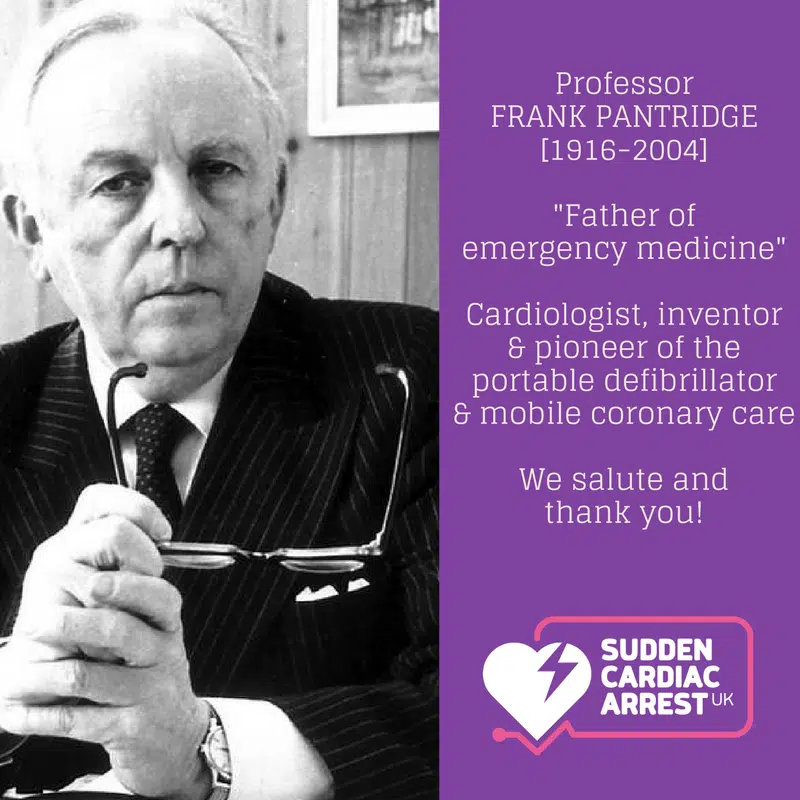
Frank Pantridge’s story reads like the tale of two extraordinary lives rolled into one. As a young Royal Army Medical Corps doctor, he was captured at the fall of Singapore in February 1942. For three and a half years, he endured the horrors of Japanese prisoner-of-war camps, including forced labour on the Burma Railway. During this time, he contracted cardiac beriberi, a usually fatal heart condition that would affect him for the rest of his life. When liberation finally came in August 1945, Pantridge was emaciated—his experience of watching countless men die from disease and brutality never left him.
This trauma would fundamentally shape his approach to emergency medicine. In the camps, Pantridge had witnessed death on an industrial scale, often when medical intervention might have saved lives if it had arrived in time. The lesson was seared into his memory: time was everything when death threatened.
The Birth of Pre-Hospital CareReturning to Belfast, Pantridge couldn’t shake what he’d learned in the camps. In the jungle, men died not just from their injuries but from the delay in receiving treatment. He saw the same pattern repeated in Belfast’s coronary care units in the 1960s—patients were dying in the critical minutes before reaching hospital.
His response was revolutionary. In 1965, Pantridge, alongside colleague Dr John Geddes and technician Alfred Mawhinney, converted an ambulance into the world’s first mobile coronary care unit. They installed a portable defibrillator—weighing a hefty 70 kilograms and powered by car batteries—and took cardiac care directly to patients. The “Belfast experiment” proved that pre-hospital defibrillation could dramatically improve survival rates.
By 1968, using a miniature capacitor manufactured for NASA, Pantridge had designed an instrument weighing only 3 kilograms. This device, small enough to be carried by ambulance crews or stored in public places, would eventually evolve into the automated external defibrillators (AEDs) now found in shopping centres, railway stations, and community halls across Britain.
Breaking the Golden HourPantridge’s wartime experience had taught him that the “golden hour”—a concept familiar to military medics—applied equally to cardiac emergencies. In the POW camps, he’d seen how rapid intervention, however basic, could mean the difference between life and death. He applied this battlefield wisdom to civilian cardiac care, arguing that waiting for patients to reach hospital was accepting unnecessary deaths.
His work, published in an influential 1967 article in The Lancet, transformed emergency medicine worldwide. The “Pantridge Plan” became the template for pre-hospital coronary care worldwide. Pantridge believed that “any lay individual who could do CPR is capable of using a defibrillator” and argued that “a defibrillator should be beside every fire extinguisher” because “life is more important than property.”
The Wider Circle of War-Tested InnovatorsPantridge wasn’t alone in channelling wartime experience into medical innovation. Peter Safar, though not a Far East veteran, escaped the Holocaust and later pioneered the ABC (Airway, Breathing, Circulation) protocol that remains fundamental to resuscitation training. Working with James Elam in the 1950s, Safar proved that mouth-to-mouth resuscitation could maintain adequate oxygen levels in non-breathing patients.
James Elam himself had served in the US Naval Hospital during World War II. His military medical experience informed his groundbreaking research, which proved that exhaled air could sustain life—research that underpinned modern CPR techniques. Together with Safar, they perfected the head-tilt manoeuvre and precise method of mouth-to-mouth breathing that replaced ineffective chest-pressure methods.
These pioneers understood viscerally what it meant to be helpless in the face of death. They knew the desperation of watching someone slip away when intervention might save them. This emotional knowledge, combined with their medical expertise, drove them to ensure future generations wouldn’t face the same helplessness.
The Japanese ConnectionIn a profound historical irony, Japan—the nation whose forces had inflicted such suffering on Pantridge and his fellow prisoners—would become one of the most enthusiastic adopters of his portable defibrillator technology. By the 1970s, Japanese manufacturers were producing advanced versions of his designs, and today Japan has one of the world’s highest densities of public-access defibrillators.
Pantridge himself harboured deep resentment—he once admitted to throwing a pint of beer in the face of the first Japanese man he saw in Belfast. Yet his focus remained fixed on saving lives, regardless of nationality. His technology transcended the hatred born of war, becoming a universal tool for preserving life.
Recognition Long OverdueDespite revolutionising emergency medicine worldwide, Pantridge received limited recognition in his own country. He was awarded a CBE in 1978, but many felt he deserved a knighthood for his contributions. It wasn’t until 1990—25 years after he installed the first defibrillator in a Belfast ambulance—that all UK frontline ambulances were equipped with the devices. This delay cost countless lives.
Today, Pantridge is honoured with a statue in Lisburn, a blue plaque at the Royal Victoria Hospital, and roads named after him in Hillsborough and Belfast. The Ulster Transport Museum preserves the original ambulance fitted with his first portable defibrillator. His death on 26 December 2004 marked the end of an era, but his legacy lives on in every life saved by a defibrillator.
Learning from AdversityFor cardiac arrest survivors and their families reading this, there’s something profoundly meaningful in understanding this history. The technology and techniques that gave you or your loved one a second chance at life emerged from the experiences of men who themselves survived against overwhelming odds.
The chain of survival—early recognition, early CPR, early defibrillation, and early advanced care—reflects lessons learned in the most hostile conditions imaginable. Veterans who had seen the worst of human cruelty dedicated their lives to preserving human life.
A Living MemorialToday, every time an AED delivers a life-saving shock, every time a bystander performs CPR, and every time a paramedic races to a cardiac emergency, they’re continuing work begun by veterans of the Far East campaign. It’s a living memorial more meaningful than any statue.
When President Lyndon Johnson suffered a heart attack in Virginia in 1972, he was treated using the Pantridge Plan. The Belfast Protocol, as emergency treatment for out-of-hospital cardiac arrest is now known, honours the city where Pantridge transformed his wartime trauma into life-saving innovation.
The Continuing BattleThe fight against sudden cardiac arrest continues. In the UK, survival rates for those treated remain below 10%, although they can far exceed this when all elements of the chain of survival function perfectly. Every improvement in these statistics honours the memory of pioneers like Pantridge, who refused to accept that sudden death was inevitable.
For those of us touched by cardiac arrest, understanding this history adds depth to our experience. We’re not just patients or survivors; we’re beneficiaries of a remarkable legacy born from adversity. The technology that saved us emerged from humanity’s darkest chapters, transformed by remarkable individuals into instruments of hope.
Honouring the LegacyThis VJ Day, as we remember the 71,000 British and Commonwealth soldiers who died in the Far East, we should also remember those who survived and used their experiences to save countless others. Frank Pantridge’s portable defibrillator has saved hundreds of thousands of lives worldwide. Peter Safar and James Elam’s CPR techniques have saved millions more.
As cardiac arrest survivors and co-survivors, we carry forward this legacy every day. When we advocate for better AED provision, when we teach CPR to others, when we share our stories to raise awareness, we’re part of a tradition that stretches back to those jungle camps and military hospitals of the 1940s.
From the Burma Railway to the Belfast ambulance, from prisoner-of-war camps to public-access defibrillation, the thread of connection runs clear and strong. Those who suffered most became those who saved most.

Paul Swindell
After our first meet-up in February 2015, I realised I was not alone. It was the first time since my cardiac arrest the previous year that I had spoken face-to-face with someone who had experienced what I had. This was also true for my wife, who also happened to be my lifesaver. From that meet-up, the idea of SCA UK was born. Since then, we have achieved a considerable amount, primarily providing information, resources and support to others in a similar situation but also raising the profile of survivorship and the need for better post-discharge care. We are starting to get traction in this, and with the formation of the charity, I genuinely believe we have a bright future ahead and will make a significant difference in the lives of many who join our ranks.
Short Link: https://scauk.org/ifDV
From Death Railway to Defibrillator: Frank Pantridge's StoryFrank Pantridge invented the world’s first portable defibrillator in 1965, transforming survival from cardiac arrest. His extraordinary story — from Japanese PoW camp to life-saving breakthrough.
As we mark VJ Day, Britain remembers those who endured unimaginable hardship in the Far East during the Second World War. Yet few realise that some of these survivors went on to fight a different battle—one against sudden cardiac arrest—and their wartime experiences directly shaped the life-saving treatments we rely on today.
The Railway of Death to the Corridors of Life
Frank Pantridge’s story reads like the tale of two extraordinary lives rolled into one. As a young Royal Army Medical Corps doctor, he was captured at the fall of Singapore in February 1942. For three and a half years, he endured the horrors of Japanese prisoner-of-war camps, including forced labour on the Burma Railway. During this time, he contracted cardiac beriberi, a usually fatal heart condition that would affect him for the rest of his life. When liberation finally came in August 1945, Pantridge was emaciated—his experience of watching countless men die from disease and brutality never left him.
This trauma would fundamentally shape his approach to emergency medicine. In the camps, Pantridge had witnessed death on an industrial scale, often when medical intervention might have saved lives if it had arrived in time. The lesson was seared into his memory: time was everything when death threatened.
The Birth of Pre-Hospital CareReturning to Belfast, Pantridge couldn’t shake what he’d learned in the camps. In the jungle, men died not just from their injuries but from the delay in receiving treatment. He saw the same pattern repeated in Belfast’s coronary care units in the 1960s—patients were dying in the critical minutes before reaching hospital.
His response was revolutionary. In 1965, Pantridge, alongside colleague Dr John Geddes and technician Alfred Mawhinney, converted an ambulance into the world’s first mobile coronary care unit. They installed a portable defibrillator—weighing a hefty 70 kilograms and powered by car batteries—and took cardiac care directly to patients. The “Belfast experiment” proved that pre-hospital defibrillation could dramatically improve survival rates.
By 1968, using a miniature capacitor manufactured for NASA, Pantridge had designed an instrument weighing only 3 kilograms. This device, small enough to be carried by ambulance crews or stored in public places, would eventually evolve into the automated external defibrillators (AEDs) now found in shopping centres, railway stations, and community halls across Britain.
Breaking the Golden HourPantridge’s wartime experience had taught him that the “golden hour”—a concept familiar to military medics—applied equally to cardiac emergencies. In the POW camps, he’d seen how rapid intervention, however basic, could mean the difference between life and death. He applied this battlefield wisdom to civilian cardiac care, arguing that waiting for patients to reach hospital was accepting unnecessary deaths.
His work, published in an influential 1967 article in The Lancet, transformed emergency medicine worldwide. The “Pantridge Plan” became the template for pre-hospital coronary care worldwide. Pantridge believed that “any lay individual who could do CPR is capable of using a defibrillator” and argued that “a defibrillator should be beside every fire extinguisher” because “life is more important than property.”
The Wider Circle of War-Tested InnovatorsPantridge wasn’t alone in channelling wartime experience into medical innovation. Peter Safar, though not a Far East veteran, escaped the Holocaust and later pioneered the ABC (Airway, Breathing, Circulation) protocol that remains fundamental to resuscitation training. Working with James Elam in the 1950s, Safar proved that mouth-to-mouth resuscitation could maintain adequate oxygen levels in non-breathing patients.
James Elam himself had served in the US Naval Hospital during World War II. His military medical experience informed his groundbreaking research, which proved that exhaled air could sustain life—research that underpinned modern CPR techniques. Together with Safar, they perfected the head-tilt manoeuvre and precise method of mouth-to-mouth breathing that replaced ineffective chest-pressure methods.
These pioneers understood viscerally what it meant to be helpless in the face of death. They knew the desperation of watching someone slip away when intervention might save them. This emotional knowledge, combined with their medical expertise, drove them to ensure future generations wouldn’t face the same helplessness.
The Japanese ConnectionIn a profound historical irony, Japan—the nation whose forces had inflicted such suffering on Pantridge and his fellow prisoners—would become one of the most enthusiastic adopters of his portable defibrillator technology. By the 1970s, Japanese manufacturers were producing advanced versions of his designs, and today Japan has one of the world’s highest densities of public-access defibrillators.
Pantridge himself harboured deep resentment—he once admitted to throwing a pint of beer in the face of the first Japanese man he saw in Belfast. Yet his focus remained fixed on saving lives, regardless of nationality. His technology transcended the hatred born of war, becoming a universal tool for preserving life.
Recognition Long OverdueDespite revolutionising emergency medicine worldwide, Pantridge received limited recognition in his own country. He was awarded a CBE in 1978, but many felt he deserved a knighthood for his contributions. It wasn’t until 1990—25 years after he installed the first defibrillator in a Belfast ambulance—that all UK frontline ambulances were equipped with the devices. This delay cost countless lives.
Today, Pantridge is honoured with a statue in Lisburn, a blue plaque at the Royal Victoria Hospital, and roads named after him in Hillsborough and Belfast. The Ulster Transport Museum preserves the original ambulance fitted with his first portable defibrillator. His death on 26 December 2004 marked the end of an era, but his legacy lives on in every life saved by a defibrillator.
Learning from AdversityFor cardiac arrest survivors and their families reading this, there’s something profoundly meaningful in understanding this history. The technology and techniques that gave you or your loved one a second chance at life emerged from the experiences of men who themselves survived against overwhelming odds.
The chain of survival—early recognition, early CPR, early defibrillation, and early advanced care—reflects lessons learned in the most hostile conditions imaginable. Veterans who had seen the worst of human cruelty dedicated their lives to preserving human life.
A Living MemorialToday, every time an AED delivers a life-saving shock, every time a bystander performs CPR, and every time a paramedic races to a cardiac emergency, they’re continuing work begun by veterans of the Far East campaign. It’s a living memorial more meaningful than any statue.
When President Lyndon Johnson suffered a heart attack in Virginia in 1972, he was treated using the Pantridge Plan. The Belfast Protocol, as emergency treatment for out-of-hospital cardiac arrest is now known, honours the city where Pantridge transformed his wartime trauma into life-saving innovation.
The Continuing BattleThe fight against sudden cardiac arrest continues. In the UK, survival rates for those treated remain below 10%, although they can far exceed this when all elements of the chain of survival function perfectly. Every improvement in these statistics honours the memory of pioneers like Pantridge, who refused to accept that sudden death was inevitable.
For those of us touched by cardiac arrest, understanding this history adds depth to our experience. We’re not just patients or survivors; we’re beneficiaries of a remarkable legacy born from adversity. The technology that saved us emerged from humanity’s darkest chapters, transformed by remarkable individuals into instruments of hope.
Honouring the LegacyThis VJ Day, as we remember the 71,000 British and Commonwealth soldiers who died in the Far East, we should also remember those who survived and used their experiences to save countless others. Frank Pantridge’s portable defibrillator has saved hundreds of thousands of lives worldwide. Peter Safar and James Elam’s CPR techniques have saved millions more.
As cardiac arrest survivors and co-survivors, we carry forward this legacy every day. When we advocate for better AED provision, when we teach CPR to others, when we share our stories to raise awareness, we’re part of a tradition that stretches back to those jungle camps and military hospitals of the 1940s.
From the Burma Railway to the Belfast ambulance, from prisoner-of-war camps to public-access defibrillation, the thread of connection runs clear and strong. Those who suffered most became those who saved most.
Paul Swindell
After our first meet-up in February 2015, I realised I was not alone. It was the first time since my cardiac arrest the previous year that I had spoken face-to-face with someone who had experienced what I had. This was also true for my wife, who also happened to be my lifesaver. From that meet-up, the idea of SCA UK was born. Since then, we have achieved a considerable amount, primarily providing information, resources and support to others in a similar situation but also raising the profile of survivorship and the need for better post-discharge care. We are starting to get traction in this, and with the formation of the charity, I genuinely believe we have a bright future ahead and will make a significant difference in the lives of many who join our ranks.
Short Link: https://scauk.org/ifDV
They changed the calendar.A history quiz. What happened in Britain on 3 September 1752?

Bombs dropping on the port of Tilbury, on 4 October 1940.
The first group of bombs will hit the ships lying in the Thames, the second will strike the docks.

Undaunted by a night of German air raids in which his store front was blasted, a shopkeeper opens up the morning after for “business as usual” in London.
Give Us Our Eleven Dayswww.historic-uk.com
The Calendar Riots of 1752, when Britain lost 11 days on changeover from the Julian to Gregorian calendar
Ben Johnson‘Give us our eleven days!’ The English calendar riots of 1752.
The eleven days referred to here are the ‘lost’ 11 days of September 1752, skipped when Britain changed over from the Julian calendar to the Gregorian calendar, bringing us into line with most of Europe.
The Gregorian calendar is today’s international calendar, named after the man who first introduced it in February 1582, Pope Gregory XIII.
Before 1752, Britain and her Empire followed the Julian calendar, first implemented by Julius Caesar in 46 BC.
However this calendar had an inbuilt error of 1 day every 128 years, due to a miscalculation of the solar year by 11 minutes.
This affected the date of Easter, traditionally observed on March 21, as it began to move further away from the spring equinox with each passing year.
To get over this problem, the Gregorian calendar was introduced. This is a solar calendar, based on a 365-day year divided into 12 months.
Each month consists of either 30 or 31 days with one month, February, consisting of 28 days. A leap year every 4 years adds an extra day to February making it 29 days long.
First to adopt the new calendar in 1582 were France, Italy, Poland, Portugal and Spain. Turkey was the last country to officially switch to the new system on January 1st, 1927.
The Calendar (New Style) Act 1750 introduced the Gregorian calendar to the British Empire, bringing Britain into line with most of Western Europe.
Its introduction was not straightforward. It meant that the year 1751 was a short year, lasting just 282 days from 25th March (New Year in the Julian calendar) to 31st December.
The year 1752 then began on 1 January.
There remained the problem of aligning the calendar in use in England with that in use in Europe. It was necessary to correct it by 11 days: the ‘lost days’.
It was decided that Wednesday 2nd September 1752 would be followed by Thursday 14th September 1752.
Claims of civil unrest and rioters demanding “Give us our eleven days” may have arisen through a misinterpretation of a contemporary painting by William Hogarth.
His 1755 painting entitled: “An Election Entertainment” refers to the elections of 1754 and depicts a tavern dinner organised by Whig candidates.
A stolen Tory campaign banner with the slogan, “Give us our Eleven Days” can be seen lower right (on the black banner on the floor under the seated gentleman’s foot).
The Tories can be seen outside the window, demonstrating.
The changing of the calendar was indeed one of the issues debated in the election campaign of 1754 between the Whigs and the Tories.
It is also true that when the British government decided to alter the calendar and skip these 11 days, many people mistakenly believed that their lives would be shortened by 11 days.
People were also unhappy and suspicious at the moving of saint’s days and holy days, including the date of Easter.
Many people also objected to the imposition of what they saw as a ‘popish’ calendar.
However, most historians now believe that these protests never happened. You could say that the calendar rioters were the late Georgian equivalent of an urban myth.
Not everyone was unhappy about the new calendar. According to W.M. Jamieson in his book, ‘Murders Myths and Monuments of North Staffordshire’, there is a tale about one William Willett of Endon.
Always keen on a joke, he apparently wagered that he could dance non-stop for 12 days and 12 nights.
On the evening of September 2nd 1752, he started to jig around the village and continued all through the night. The next morning, September 14th by the new calendar, he stopped dancing and claimed his bets!
Footnote:
Have you have ever wondered why the tax year in Britain starts on the unlikely date of 6th April, rather than 1st January?
The official start of the year on the Julian calendar used to be Lady Day (25th March), and this was also the official start of the tax year.
However the introduction of the new calendar and the loss of the eleven days in 1752 meant this date was changed to 5th April in 1753, to avoid losing 11 days of tax revenue.
Another change was made to the date in 1800, as this would have been a leap year in the Julian calendar but not in the new Gregorian calendar.
So again the tax year was extended and the date changed to 6th April where it remains to this day.
Published: 29th November 2014